Fielding and mapping out the Niche.
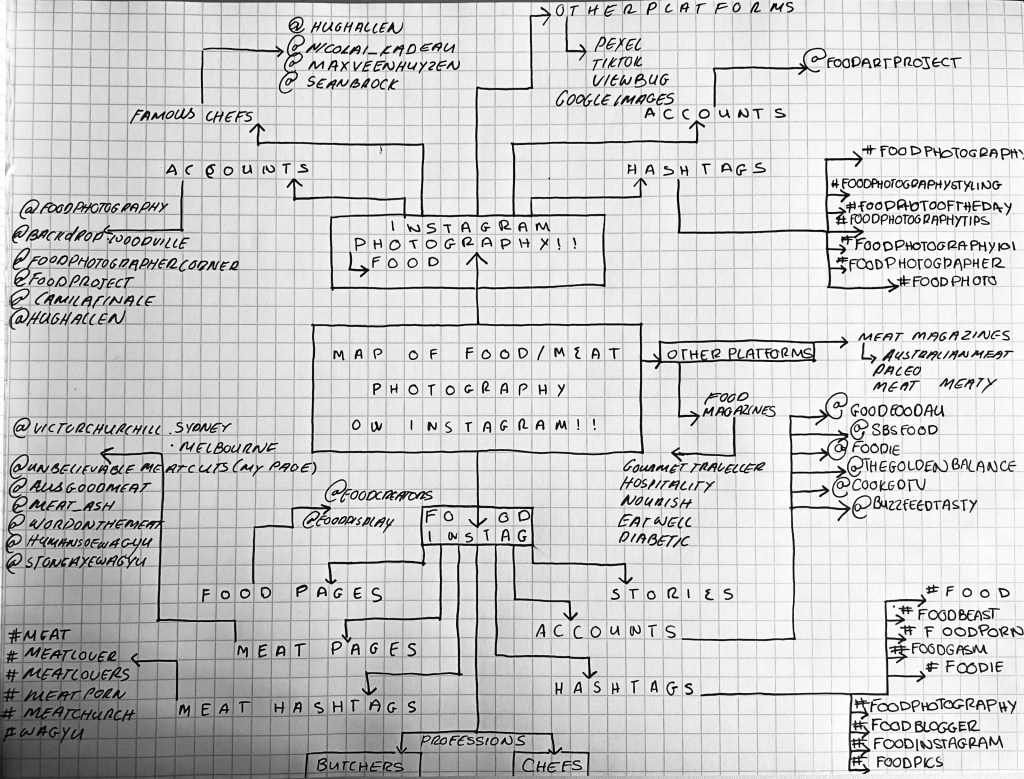
This week I decided to map out my niche and plan out my digital artefact. I think it’s really important to establish what my media niche is, and the best way for me to establish that is to create a field map. Analysing all the particular components of my niche that I’m going to be researching.
As you can see from the map that I created, I gathered A collection of data that I have observed on my chosen niche and social platform. The social platform that I’m going to be using to conduct my research will be Instagram. I find it scribe to be the best social media platform for This project.
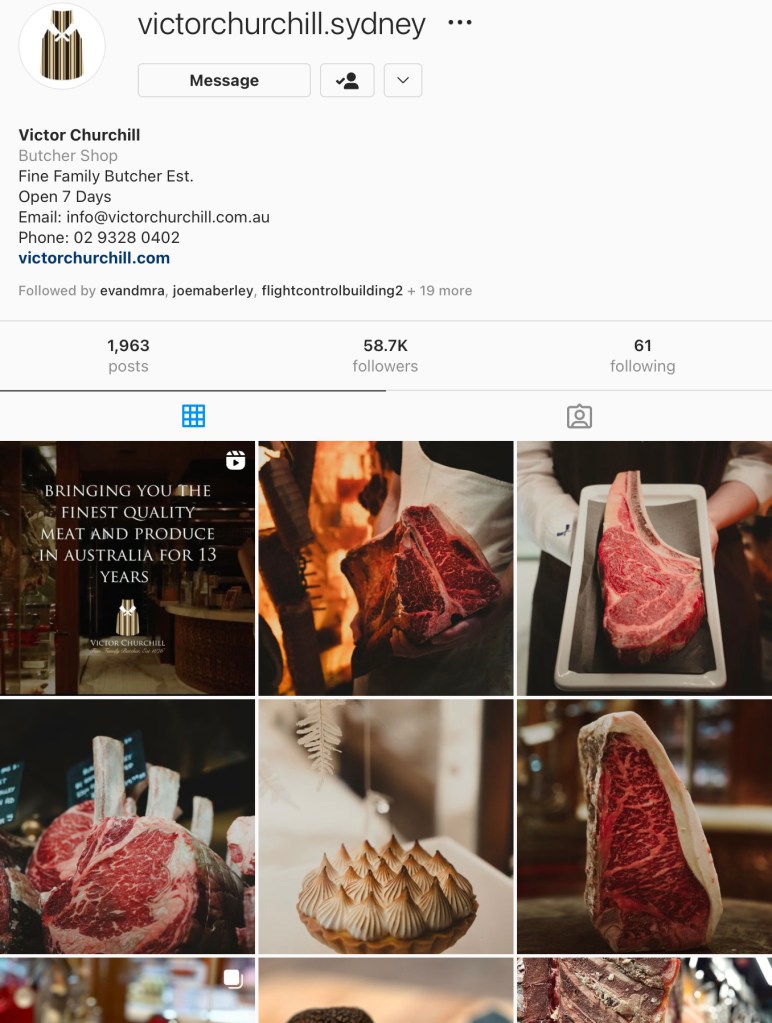
Just to clarify what exactly my niche is, I will be looking in to The world of food photography, However specifically within the meat culture. I personally have a background in butchery. I had worked in a very famous butcher shop in Sydney for about 12 months as a sales consultant. So I have a very particular interest in culinary culture as well as butchery.
I believe this niche is extremely relevant, towards the food/marketing industry as a whole. As well as my personal growth within communication in multimedia making and creative direction. I also would like to point out that it would probably be a benefit to the meat industry in the sense of showcasing respectful content that is ethically well thought out on meat and the distribution of it. There is definitely a issue of ethics regarding the meat industry. I want to find a solution to this problematised concept.
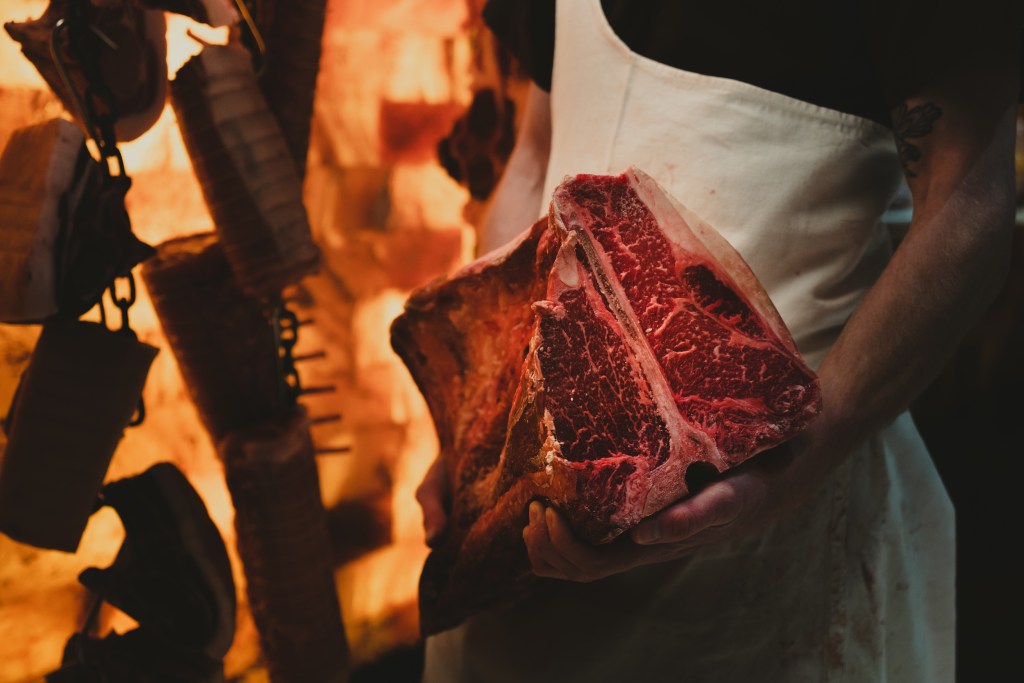
Now that I have established The embodiment of what my digital artefact will be. I want to sort of express my understanding of ethnographic process. And how I accumulated my understanding of this particular research process. This project is essentially the observation and engagement of background data and sources. To research my experience within a particular niche. And to summarise my findings and then frame them for a public audience. Essentially, Mediate and Communicate.
Dawson Catherine (2002) P.107 – “At the beginning of a participant observation study it is hard to understand what everything means. At first some- thing may appear very significant, but later it might be- come a minor detail…You need to have a good memory as in many situations it is not possible to take notes at the time. You need to have a notepad with you at all times so that you can write down your thoughts as soon as possible after the encounter”.
As I began to research methods of ethnography, this particular statement appeal to me. Of having to be quick to note down thoughts as soon as you encounter. As a growing researcher I Thoroughly agree with this statement and skill of method. To be able to quickly take note of an important encounter is a beneficial ability to retrieve data and information.
I want to thoroughly practice the skill and utilise it within my research, and not just simply for this project but for future projects as well. I think it’s a very reliable skill and method Dawson Catherine stated.
I look forward to pitching this idea in my next blog.
Audio Journal #2
BIBLIOGRAPHY
 Dana Cetojevic
Leave a comment